AI Readiness: The Gap Between Pilot and Business Value
October 20, 2026

AI Readiness: The Gap Between Pilot and Business Value
An AI pilot can deliver an impressive demo and still struggle to go any further. The technology may work, but the organization still has to decide who owns the outcome, whether the data is ready, how the work will change, and what comes after a successful test. A pilot proves that a tool can work. It does not always prove that the organization is ready to use it.
The numbers show that many organizations are in the same position. IBM's 2025 CEO Study found that only 25% of AI initiatives represented in the survey had delivered the expected return on investment, and only 16% had scaled across the enterprise. Half of the CEOs surveyed also said that rapid investment had left their organizations with disconnected, piecemeal technology. The findings show how much ground remains between experimenting with AI and building something the business can sustain.
Closing that gap takes more than a successful pilot. It takes an organization that is ready to support and sustain the work. Readiness helps leaders invest with confidence by exposing risks, dependencies, and ownership questions before implementation begins.
At Marathon Consulting, we use readiness to help turn a promising AI idea into a result the organization can sustain. That starts with an honest look at where the organization is today, which dependencies could get in the way, and what should happen next.
The Marathon AI Readiness Framework organizes that work into 5 connected phases. It helps an organization understand its current capabilities, bring the right people into the conversation, decide where to invest, and build a roadmap it can realistically carry out. The details vary by organization, but the framework keeps the focus on the same practical question: what decision should the evidence support next?
Why Promising AI Pilots Stall
Choosing the right technology is only part of the job. In our work with organizations evaluating AI initiatives, ownership and readiness questions often surface before technology limitations do. Pilots also stall when data is unreliable, business processes are not ready to change, or no one has defined what happens after the test. These issues usually fall into 3 connected gaps.
For Marathon, those gaps are:
- Direction: leaders have not agreed on the outcome, ownership, or priorities.
- Readiness: data, governance, workflows, and employees are not prepared.
- Scale: the pilot lacks measures, an operating model, funding, or a path into production.

In one anonymized readiness engagement with a regulated organization, the work quickly moved beyond licensing. The team had to examine existing access, shared content, sensitive-information controls, and policy enforcement before adoption could expand with confidence. The AI tool did not create those issues, but it made resolving them more urgent.
Readiness cannot guarantee success. It helps leaders address these connected barriers before they become expensive implementation problems.
Five Decisions That Move AI Forward
The Marathon AI Readiness Framework turns that work into 5 decisions. It does not require every organization to follow the same sequence. Instead, it helps leaders determine where attention is needed now and what evidence should guide the next investment.
|
Phase |
Decision it enables |
Practical outcome |
|
Strategic AI Readiness Assessment |
Where are we ready, and where are the critical gaps? |
A shared current-state view and prioritized readiness agenda |
|
Responsible AI Governance |
What guardrails, roles, and oversight do we need? |
A governance model aligned to risk, policy, and accountability |
|
Opportunity Discovery and Prioritization |
Which use cases deserve investment first? |
A ranked portfolio based on impact, feasibility, data, and risk |
|
Implementation Blueprint |
What must be true to execute successfully? |
An actionable roadmap covering people, process, data, and technology |
|
Pilot and Scale |
What should we prove, improve, stop, or expand? |
Measured evidence and a deliberate path to scale |
What This Looks Like in Practice
Consider a manufacturer with a promising predictive-maintenance use case. The model may perform well in a controlled pilot, but inconsistent equipment data limits its reliability. Operations and IT may not agree on who owns the outcome, and frontline teams may not have been involved in changing the maintenance workflow. The pilot is technically promising, but scaling it now would create avoidable risk.
Marathon evaluates the opportunity using 5 practical criteria:
- Business impact: the value the use case is expected to create.
- Implementation feasibility: the effort and constraints involved in delivering it.
- Data readiness: whether the required data is available, reliable, and usable.
- Organizational risk: the governance, operational, and adoption concerns that could affect the outcome.
- Measurable outcomes: whether success can be defined and evaluated.
That review makes the dependencies visible and shows whether the next step should be a pilot, remediation work, a narrower use case, or a pause.
That is an important difference between this framework and a standard maturity assessment. The goal is not simply to assign a score. It is to improve the decision. Some initiatives should move forward. Others should change, wait until critical gaps are addressed, or stop because the expected value does not justify the effort and risk.
In another anonymized engagement, the team paused a promising agent idea because the underlying process was not fully documented. Automating the visible steps would have produced a faster version of an incomplete workflow. The right next investment was process clarification, not agent development.
The output is a decision-ready roadmap that identifies what should happen, who owns it, which dependencies must be resolved, how progress will be measured, and what evidence will support the next decision.
What the Readiness Roadmap Delivers
A readiness engagement brings business sponsors, technology leaders, data owners, security and governance stakeholders, process owners, and adoption leaders into the same decision process. Deliverables typically include a readiness assessment summary, prioritized opportunities, governance recommendations, an implementation roadmap, an ownership model, success measures, and clear next-step decisions.
The framework also aligns with NIST's AI Risk Management Framework, which organizes responsible AI work around Govern, Map, Measure, and Manage. Marathon connects those risk-management principles with business alignment, use case selection, delivery planning, and adoption so they can guide an operating plan rather than remain a separate compliance exercise.
Because Marathon combines business consulting, solution architecture, data, governance, implementation, and change enablement, the roadmap addresses organizational and technical constraints together. That connection matters because decisions in one area change what is possible in another. The integrated view below helps leaders see the work as one coordinated plan rather than a collection of separate technical and business tasks.

A readiness roadmap does not assume that every AI idea deserves a green light. It gives leaders enough evidence to proceed, adjust the scope, address a dependency, postpone the work, or stop before more time and money are committed.
Make the Next AI Decision with Confidence
If your organization has a promising AI idea but still has questions about ownership, data, governance, adoption, or what comes after the pilot, start with the next decision. Marathon Consulting can help you determine whether to move forward, what must be addressed first, and what evidence should guide the investment. That may mean a readiness assessment, governance work, use case prioritization, an implementation blueprint, or a deliberate decision to wait.
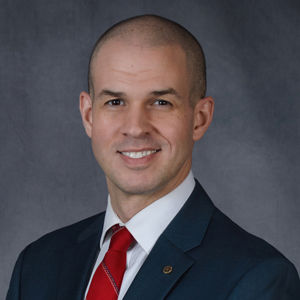
Chris MalpassCore Contributor
Chris Malpass is a seasoned software developer and data geek native to Hampton Roads, Virginia. As a Marathon Consultant Chris prides himself on learning and applying new skills quickly. A veteran of the open-source world, Chris is now heavily focused on building solutions based on the .NET framework and Microsoft products. When Chris isn’t helping our clients solve complex problems, he’s likely traveling with his family, reading, or exploring the region with one of his many vintage cameras.